Italian Restaurant Etiquette: How to Eat Out in Italy Without Looking Lost
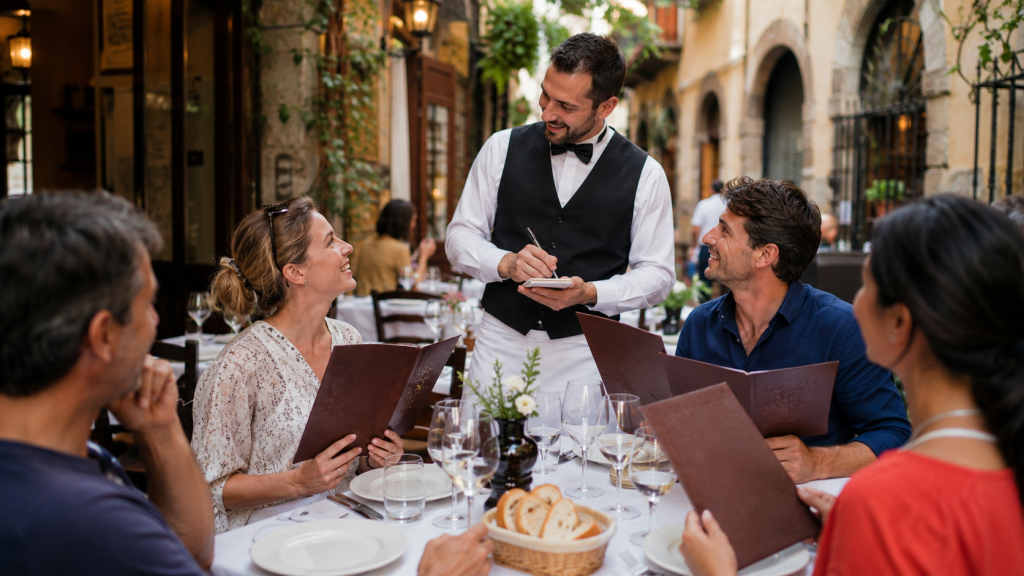
Italian restaurant etiquette is not about memorising strict rules. It is mostly about understanding the rhythm of eating out in Italy: meals are slower, menus are structured differently, tipping is modest, and service usually gives you space rather than rushing you.
For first-time visitors, the biggest surprises are often small practical things. Restaurants may not be open all day. The bill may include a cover charge called coperto. A waiter may not bring the check until you ask. And a cappuccino after dinner will mark you out as a tourist faster than almost anything else.
This guide explains Italian food etiquette in a practical way, so you know what to order, how to handle the bill, when to tip, and which common mistakes to avoid.
Quick Cheat Sheet
Best overall rule: eat at the local rhythm, not at the schedule you use at home.
Best for first-timers: book restaurants for dinner, especially in Rome, Florence, Venice, Milan, Naples and popular coastal towns.
Best budget habit: check the menu for coperto and servizio before ordering.
Best way to avoid awkwardness: ask for the bill when you are ready: Il conto, per favore.
Typical tourist mistake: leaving a large percentage tip automatically, especially when a service charge is already included.
What to check in advance: opening hours, reservation rules, cover charge, and whether the restaurant is casual, traditional or fine dining.
The Main Principle of Eating Etiquette in Italy
The main idea behind eating etiquette in Italy is simple: food is not treated as a rushed transaction. A restaurant meal is usually slower, more structured and less “customised” than in many tourist-heavy destinations.
That does not mean you need to behave perfectly. Italians are used to visitors. But you will have a better experience if you understand that dinner is not usually very early, the waiter may not constantly check on you, and the table is often yours for a relaxed meal.
Lunch is commonly around 12:30–2:30 pm, while dinner often starts from around 7:30–8:30 pm, depending on the city and region. Many restaurants close between lunch and dinner, so assuming you can eat a full meal at any hour is one of the easiest mistakes to make.
Restaurant Etiquette in Italy
At a traditional restaurant, do not expect to be seated, served and finished in 40 minutes. Italian meals often move in stages: antipasto, primo, secondo, contorno, dessert, coffee. You do not have to order every course, but the structure explains how the menu is organised.
A practical order for most travellers is one antipasto to share, then either a primo or secondo per person. If you are very hungry, order both a primo and secondo. If you want something light, one main course is usually fine, but avoid treating a traditional restaurant like a fast-food stop.
Reservations are useful, especially for dinner. In busy tourist cities, on weekends, in summer, and in smaller towns with limited restaurants, booking ahead can save you from wandering between fully booked places.
Italian Food Etiquette: Ordering Without Overcomplicating It
Italian food etiquette is often about respecting the dish as it appears on the menu. Asking for small adjustments because of allergies or dietary needs is fine. Asking to rebuild a pasta dish completely is usually not.
A few simple rules help:
- Pasta is normally a first course, not a side dish.
- Salad or vegetables often come separately as contorni.
- Cheese is not automatically added to every pasta, especially seafood pasta.
- Bread is not always free.
- Sharing antipasti is normal, but main dishes are usually ordered individually.
- Coffee after a meal usually means espresso, not a large milk coffee.
You can still eat casually. Italy is not one single etiquette museum. A pizzeria in Naples, a trattoria in Bologna, a seafood restaurant in Sicily and a café in Milan will all feel different. The safest approach is to follow the menu, ask politely, and avoid treating every restaurant like it should adapt to international habits.
Coperto, Servizio and the Bill
One of the most important Italy restaurant rules for tourists is understanding the bill.
Coperto is a cover charge, usually charged per person. It is not a tip. It may cover table setting, bread or the general cost of sitting down in the restaurant. Servizio is a service charge, and if it appears on the bill, you generally do not need to add an extra tip. Travel guides commonly describe coperto as a few euros per person and servizio as a percentage-based service charge in some restaurants, especially in tourist areas or for larger groups.
Before ordering, check the menu for these words:
- coperto: cover charge per person
- servizio incluso: service included
- servizio non incluso: service not included
- pane: bread charge, if listed separately
In Italy, the waiter often will not bring the bill automatically because that can feel like pushing you out. When you are ready, ask: Il conto, per favore. Food & Wine also notes that diners usually request the bill rather than waiting for it to appear automatically.
Tipping Etiquette in Italy
Tipping in Italy is not like tipping in the United States. It is not usually mandatory, and it is not normally expected as a fixed 15–20% rule. A small tip is appreciated for good service, but it is not required in the same way it is in some countries.
A practical rule:
- For coffee at the counter: no tip needed.
- For casual lunch: round up or leave €1–2 if service was good.
- For a simple dinner: a few euros is enough.
- For excellent service or fine dining: 5–10% can be generous.
- If servizio is already included: no extra tip is necessary.
Do not feel pressured to leave a large percentage tip just because you are a tourist. Also, do not confuse coperto with a tip. Coperto goes on the bill as a normal restaurant charge; it is not a personal reward for the waiter.
Café and Bar Etiquette
In Italy, a bar often means a café, not only a place for alcohol. This is where you get espresso, cappuccino, cornetti, sandwiches and quick drinks.
At many cafés, especially in cities, the routine can be:
- pay first at the cashier,
- take the receipt,
- order at the counter,
- drink standing if it is a quick coffee.
Sitting at a table may cost more than standing at the counter, especially in tourist areas or famous cafés. This is not a scam by itself. It is part of the service model, but prices should be clear.
Cappuccino is mostly a breakfast drink. Ordering it after lunch or dinner is not forbidden, but it is not local dining etiquette. Michelin’s 2026 guide to dining in Italy also highlights the post-meal cappuccino as one of the classic tourist mistakes.
Better after a meal:
- espresso
- macchiato
- caffè corretto
- herbal tea, if available
Bars, Aperitivo and Casual Drinks
Aperitivo is not just “cheap dinner”, although in some places it can feel generous enough to replace one. It is usually an early evening drink with small snacks before dinner.
The etiquette is simple: order a drink, enjoy the snacks provided, and do not treat a small buffet like an unlimited meal unless that is clearly the format of the place.
In tourist cities, aperitivo can range from local and relaxed to overpriced and average. Check the menu before sitting down, especially near major squares and landmarks.
Card Payments and Cash
Cards are widely used in Italy, especially in cities, hotels, restaurants and larger cafés. Still, carrying some cash is practical for small purchases, tips, markets, public toilets, small bars, rural areas and places where splitting bills by card may be inconvenient.
For tipping, cash is often easier. If you want to leave a small tip, leaving coins or a few euros on the table is usually simpler than trying to add it to a card payment.
Common Tourist Mistakes
The first mistake is eating too early and expecting atmosphere. A restaurant may be open at 7 pm, but locals may arrive later. If you eat very early, you may find yourself surrounded mostly by tourists.
The second mistake is over-ordering. You do not need antipasto, primo, secondo, contorno, dessert and coffee every time. Italian menus are structured in courses, but tourists can choose what fits their appetite and budget.
The third mistake is expecting constant waiter attention. In Italy, less interruption is often considered better service. If you need something, make eye contact or politely ask.
The fourth mistake is tipping too much automatically. A modest tip is fine. A large tip is not necessary unless the service was genuinely exceptional.
The fifth mistake is ignoring the bill details. Always check whether coperto or servizio has been added before deciding on an extra tip.
Who This Etiquette Matters Most For
First-time visitors should learn the basics because it makes restaurant experiences smoother and less stressful.
Budget travellers should pay attention to coperto, table charges, drinks, bread and location. A restaurant beside a major landmark can cost much more than a similar place two streets away.
Families should check opening hours and book earlier dinners where possible. Some traditional restaurants may not start dinner service until later than children are used to.
Solo travellers should feel comfortable eating alone. Italy is generally fine for solo dining, especially in cities, cafés, casual trattorias and lunch spots.
Couples should book ahead for popular restaurants. Good romantic restaurants in cities like Rome, Florence and Venice can fill quickly, especially on weekends.
Final Advice Before Eating Out in Italy
For most travellers, the best approach to Italian restaurant etiquette is simple: book dinner, eat at local meal times, check the bill for coperto and servizio, and tip modestly rather than automatically.
For budget trips, avoid restaurants directly beside major attractions, check charges before sitting, and use cafés, bakeries, markets and casual trattorias to balance costs.
For short trips, reserve at least one good traditional meal instead of leaving every dinner to chance.
For comfort, learn three phrases: Buongiorno, grazie, and Il conto, per favore. You do not need perfect Italian, but a little politeness goes a long way.
The main rule is not to panic about rules. Eating etiquette in Italy is mostly about slowing down, reading the menu carefully, and respecting the way the meal is designed.