Best Temples in Nepal
Nepal is not only about the Himalayas and trekking, but also a country where temple tradition remains part of everyday life. Here, two major cultures exist side by side — Hindu and Buddhist: ancient shrines in the Kathmandu Valley, hilltop stupas, monasteries, and temple squares in old towns. In a single trip, you can see very different “types” of temples: large pilgrimage complexes, quiet stupas for circumambulation, urban sanctuaries with rituals by the rivers, and historic palace squares filled with temple architecture.
This guide will offer a clear list of the best temples in Nepal and practical tips: how to get there, how much time to plan for a visit, when it’s best to go, and what etiquette rules to keep in mind so you feel confident and don’t disturb those who come here to pray.
Top Temples in Nepal: What to See First
The most famous in the country:
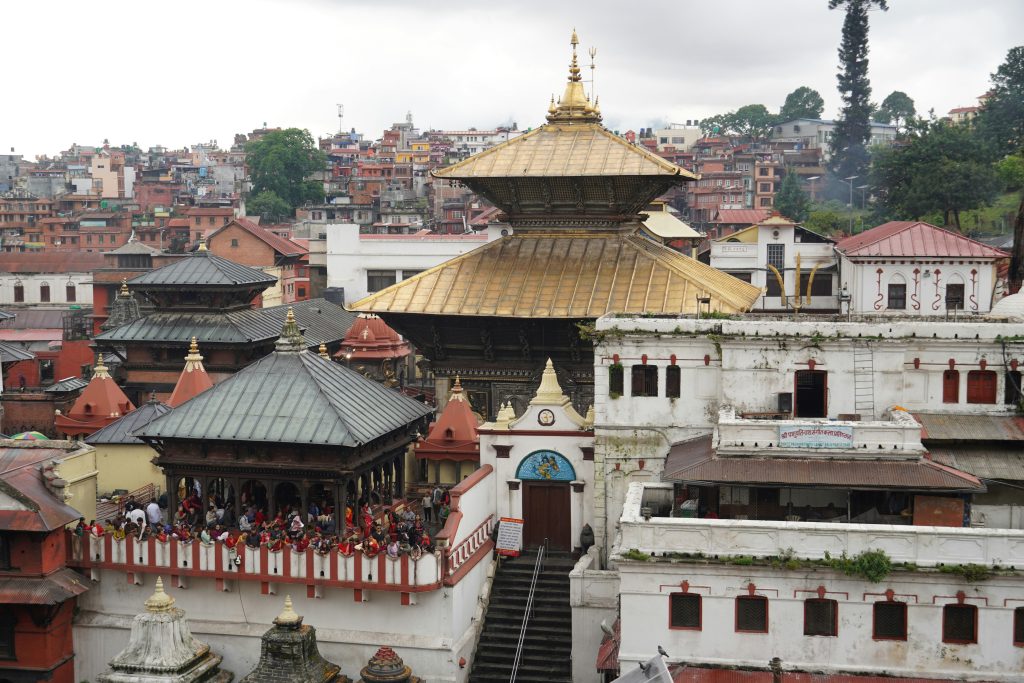
- Pashupatinath Temple (Kathmandu) — the country’s main Hindu temple and its most important pilgrimage site.
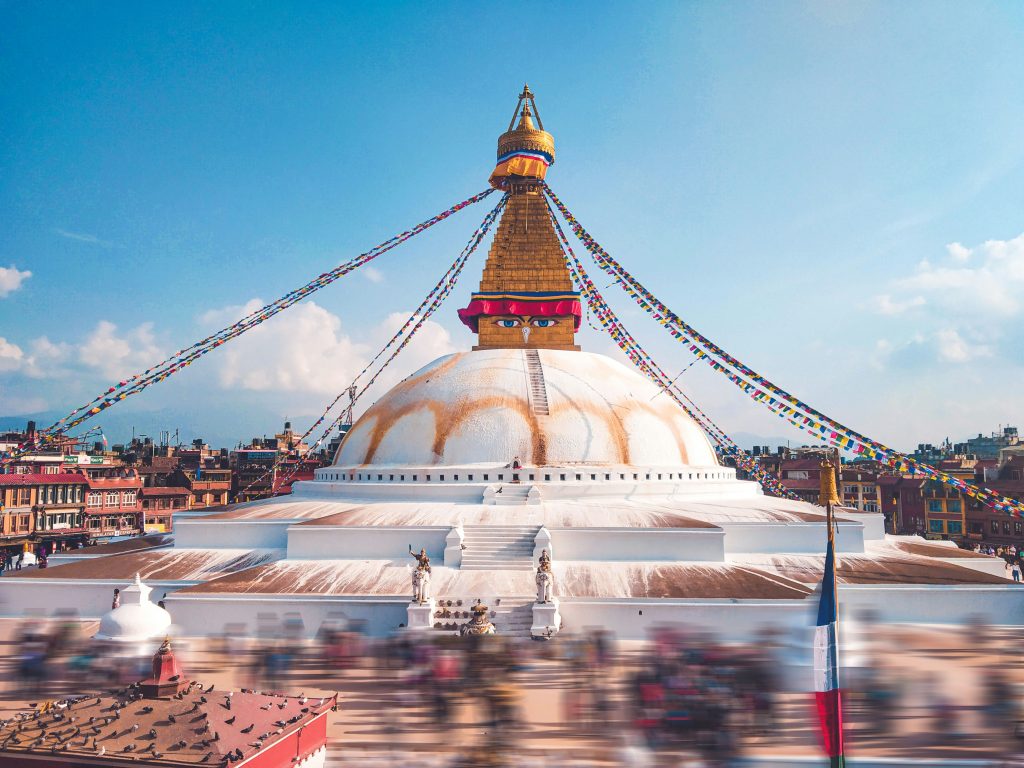
- Boudhanath Stupa (Kathmandu) — one of the largest stupas in the world and a centre of Tibetan Buddhist life.
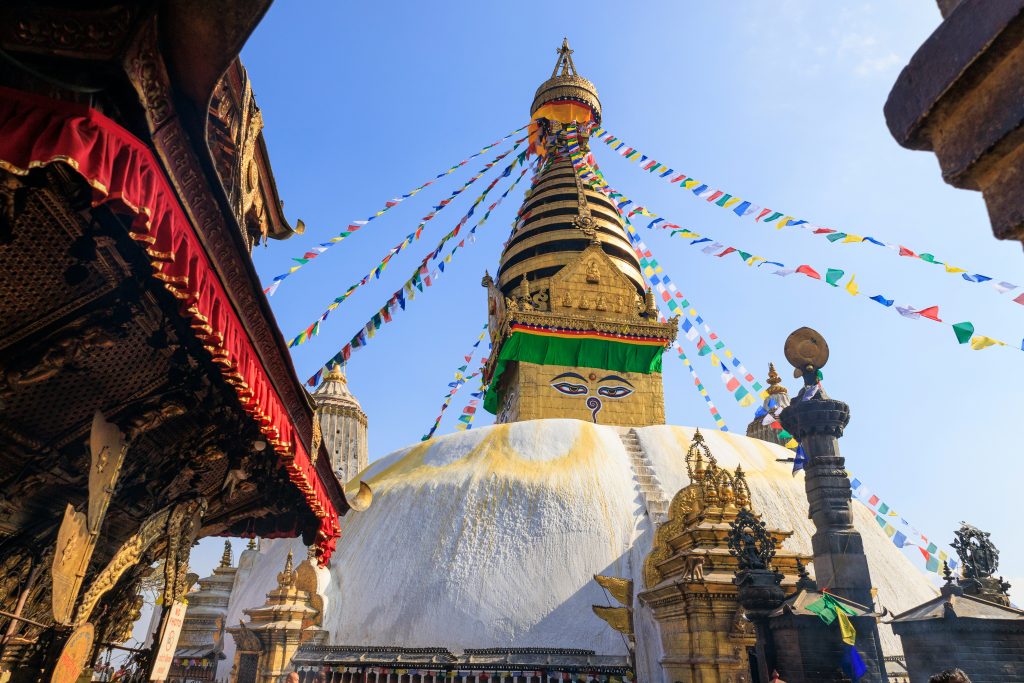
- Swayambhunath (Kathmandu) — the “Monkey Temple” on a hill and the classic panoramic viewpoint over the valley.
The most atmospheric:
- Bhaktapur Durbar Square + Nyatapola Temple (Bhaktapur) — a medieval museum-city with carving, squares, and that “old Nepal” feeling.
- Patan Durbar Square + Krishna Mandir (Lalitpur/Patan) — calmer, with lots of architectural detail.
- Kopan Monastery (Kathmandu outskirts) — a quiet monastery with valley views; great for a “reset” without the crowds.
The most ancient:
- Changu Narayan (Bhaktapur area) — one of the oldest and most significant Hindu temples in the valley.
- Swayambhunath (Kathmandu) — a sacred site with very early origins and many valley legends.
- Maya Devi Temple, Lumbini (Lumbini) — a key Buddhist site linked to the birth of the Buddha.
Best if you have little time:
Kathmandu in 1 day: Swayambhunath → Boudhanath → Pashupatinath (a logical sequence with no long transfers).
Best in the capital / near the capital:
- Pashupatinath (Kathmandu) — a must-see if you want to understand Hindu Nepal.
Best “off the classic tourist route”:
- Namo Buddha (Kavre, 1-1.5 hours from Kathmandu) — a quiet Buddhist sanctuary and an easy half-day trip.
- Budhanilkantha (north Kathmandu) — a huge open-air Vishnu statue.
How many days do you need for temples on a first trip?
On average, 2-3 days — enough to see the key shrines and temple squares without rushing.
The Best Temples in Nepal
Kathmandu Valley
- Pashupatinath Temple
Nepal’s main Hindu shrine dedicated to Shiva; part of the “Kathmandu Valley” World Heritage Site (UNESCO).
Location: Kathmandu, on the banks of the Bagmati River.
How to visit: independently.
Time needed: 1-2 hours.
Best time: morning, weekdays.
Tickets/donation: foreigners pay an entry fee (it’s best to double-check the current amount via NTB).
- Boudhanath Stupa
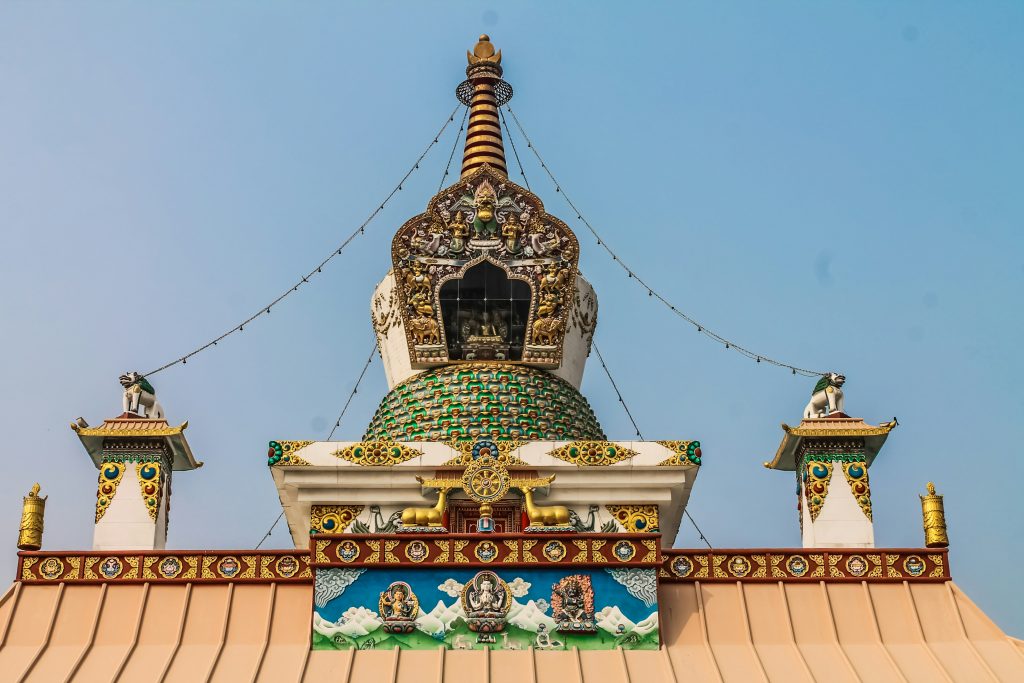
The largest stupa in Nepal, part of the Kathmandu Valley UNESCO listing, and one of the country’s key centres of Tibetan Buddhism.
Location: Kathmandu, Boudha area.
How to visit: independently; it makes sense to combine it with Pashupatinath.
Time needed: 60-90 minutes.
Best time: morning (better light and quieter) or sunset (the most “alive” atmosphere).
Tickets/donation: paid entry (check via NTB).
- Swayambhunath
One of the valley’s oldest Buddhist complexes and a “visual symbol” of Kathmandu on a hill; part of Kathmandu Valley UNESCO. The site has a famous legend about a lotus that grew in the valley’s ancient lake and “gave birth” to the shrine; this is also where the recognizable “Buddha eyes” on the stupa come in.
Location: west of central Kathmandu, on a hill.
How to visit: independently.
Time needed: 60-90 minutes.
Best time: sunrise / early morning.
Tickets/donation: paid entry (check via NTB).
- Kathmandu Durbar Square (Hanuman Dhoka)
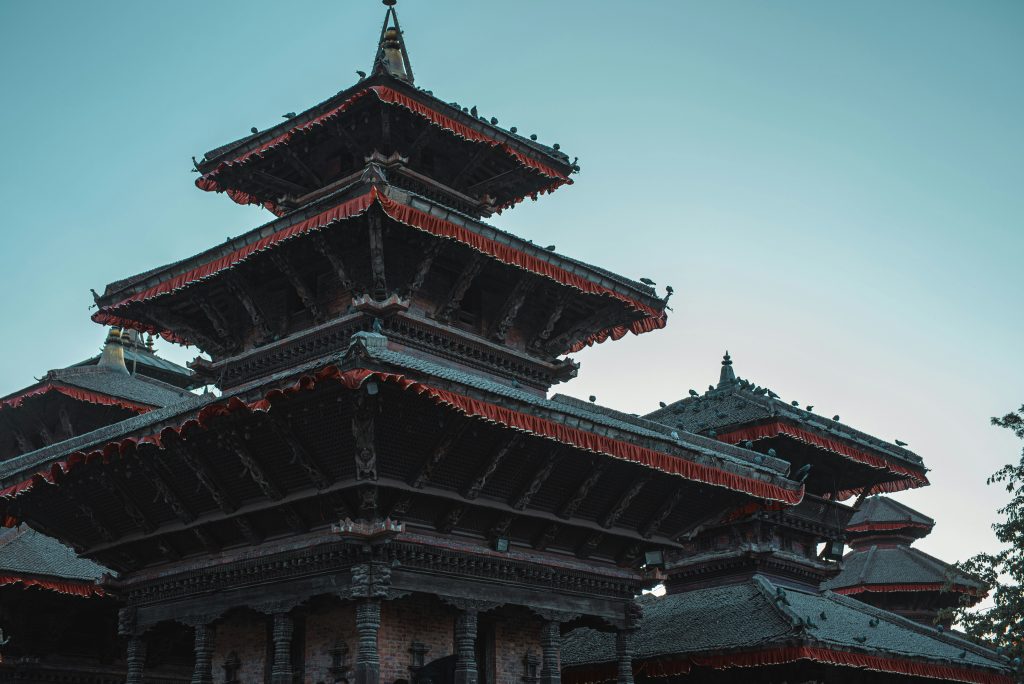
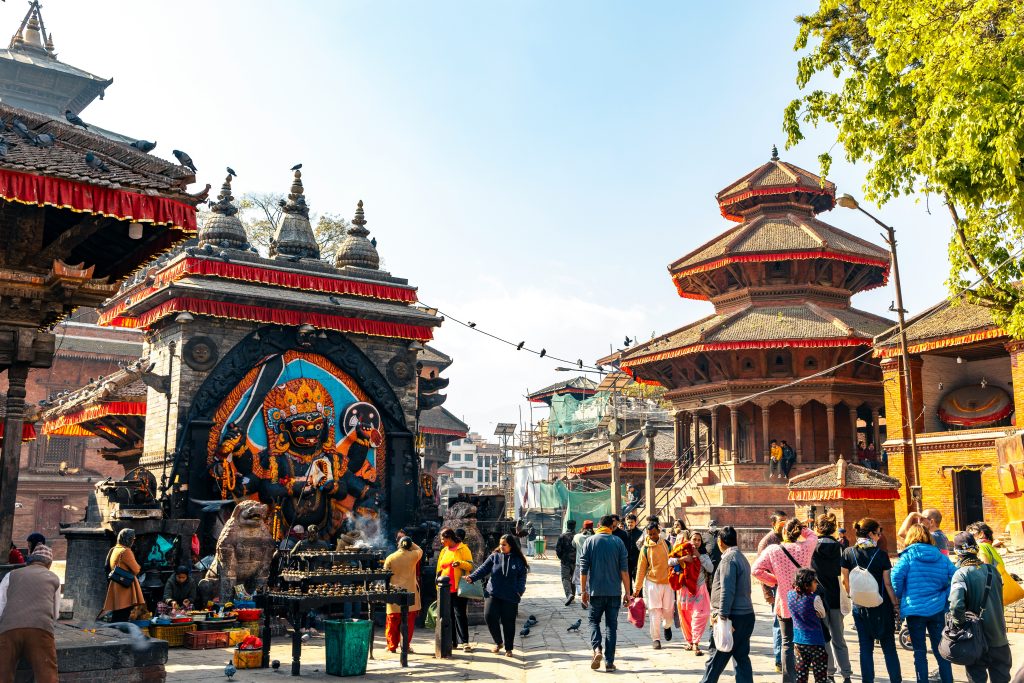
The historic core of old Kathmandu: the palace, temple courtyards, and layers of Newar architecture; a UNESCO site (Kathmandu Valley). A useful detail: it’s not “one temple,” but a whole concentration of shrines and squares.
Location: the centre of old Kathmandu.
How to visit: on foot / by taxi.
Time needed: 1-2 hours (longer if you add museums).
Best time: morning, weekdays.
Tickets/donation: paid entry (check via NTB).
Patan (Lalitpur)
- Hiranya Varna Mahavihar
A “golden” Newar Buddhist monastery — small in area, but packed with details. Linked to local legends (for example, the one about a “rat chasing a cat” as a sign of the place), and inside there’s a large prayer wheel and golden shrine elements.
Location: Patan, not far from Durbar Square.
How to visit: independently.
Time needed: 30-45 minutes.
Best time: morning.
Tickets/donation: paid entry (check via NTB).
Bhaktapur
- Nyatapola Temple
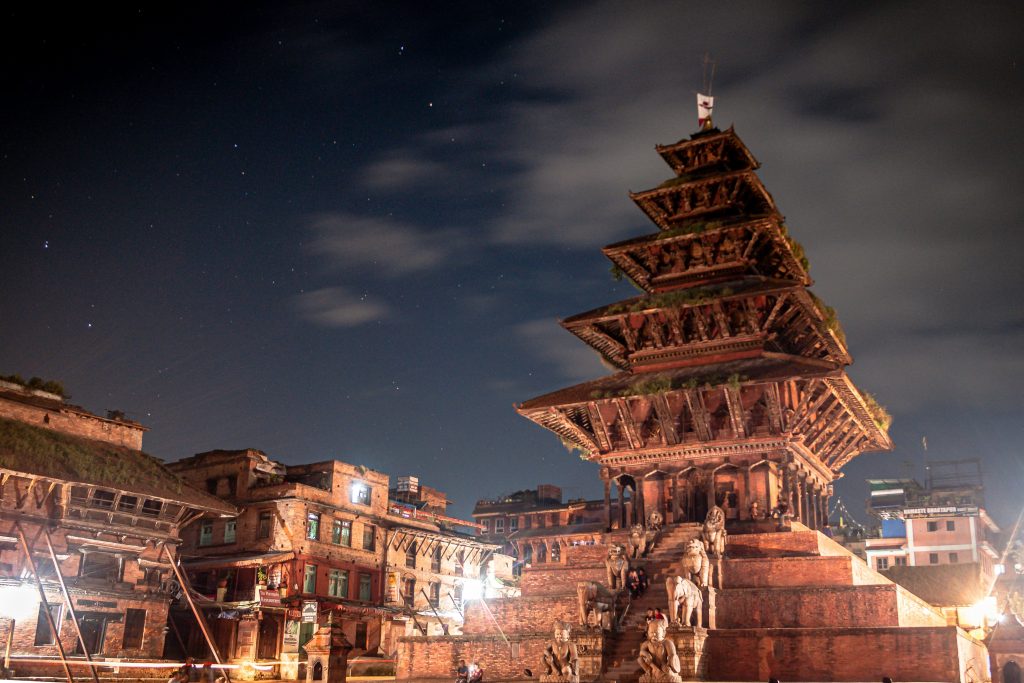
Bhaktapur’s most recognizable “five-tier” pagoda and the tallest temple in Nepal. It survived several major earthquakes, including the strong 2015 earthquake — an extra reason to pay attention to its construction and massive “tiers.”
Location: Bhaktapur, Taumadhi Square.
How to visit: on foot within the city.
Time needed: 30-60 minutes.
Best time: morning / late afternoon.
Tickets/donation: usually included in Bhaktapur’s general entry ticket.
- Changu Narayan
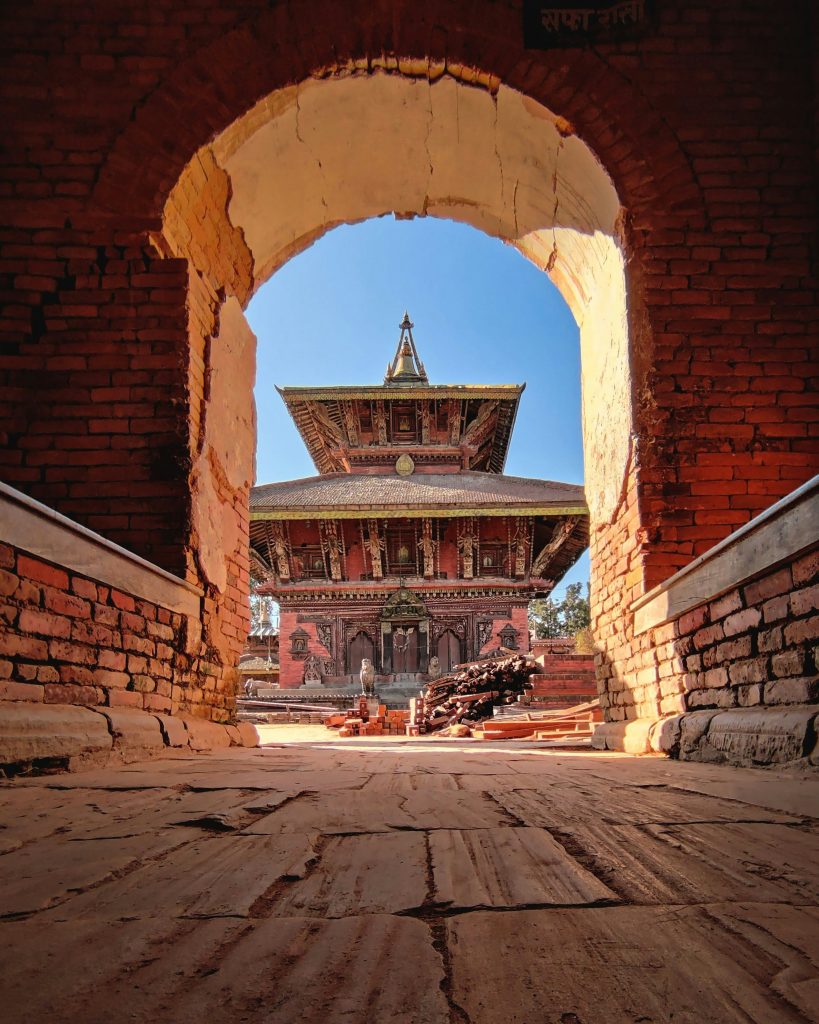
One of Nepal’s oldest Hindu temples, dedicated to Vishnu; part of Kathmandu Valley UNESCO. It features one of the valley’s early (5th-century) inscriptions, often mentioned as an important historical “marker” for Nepal.
Location: a hill between Kathmandu and Bhaktapur.
How to visit: by car; easy to combine with Bhaktapur.
Time needed: 60-90 minutes.
Best time: morning.
Tickets/donation: paid entry (check via NTB).
Around the valley
- Budhanilkantha (Sleeping Vishnu)
A rare format for the valley: a huge reclining Vishnu figure in a water basin in the open air. The statue is often described as Nepal’s largest stone carving; the site becomes especially lively during religious fairs/melas (for example, those linked to Ekadashi).
Location: north of Kathmandu.
How to visit: taxi / ride-hailing.
Time needed: 30-60 minutes.
Best time: morning, weekdays.
Tickets/donation: more often a donation (rules can change on the spot).
- Namo Buddha
One of the most revered Buddhist sites near Kathmandu — people come for the calm and a “pilgrimage” atmosphere. The place is linked to the legend of Prince Mahasattva, who sacrificed himself for a tigress and her cubs; that story is why Namo Buddha feels like a “powerful” place even for those far from religion.
Location: Kavre district (≈40 km from Kathmandu by road).
How to visit: easiest with a driver / tour.
Time needed: half a day (including travel).
Best time: morning, on a clear day.
Tickets/donation: more often a donation.
Outside the valley
- Lumbini
The birthplace of the Buddha, a UNESCO World Heritage Site; it’s not “one temple,” but a large pilgrimage area. The archaeological layers at the Maya Devi Temple (within the Lumbini complex) include structures from the 3rd century BCE and later; nearby is the famous Ashoka Pillar, which helped make the site a key pilgrimage point from very early times.
Location: southern Nepal, Lumbini.
How to visit: best with an overnight stay, so it doesn’t turn into a rushed “dash.”
Time needed: half a day to a full day.
Best time: morning; weekdays are calmer.
Tickets/donation: usually paid entry (check via NTB / on site).
Suggested temple itineraries in Nepal
Option A — 3-4 days
Regions: Kathmandu Valley (Kathmandu + Patan + Bhaktapur)
Travel logic: everything around one base; day trips without changing cities.
Day 1 — Kathmandu:
- Swayambhunath (morning, while it’s quiet and not too hot)
- Kathmandu Durbar Square (midday — architecture and the old town)
Day 2 — eastern Kathmandu:
- Pashupatinath (morning)
- Boudhanath (afterwards; you can save sunset for the stupa)
Day 3 — Patan:
- Patan Durbar Square + museum
- Golden Temple (a short add-on within walking distance)
Day 4 (if you have it) — Bhaktapur:
- Bhaktapur Durbar Square + Nyatapola (a full day / half-day)
- Namo Buddha (a half-day trip for a calmer atmosphere)
How many moves: 0 base changes — only day trips.
Best base: Kathmandu (Thamel/central area) — convenient for logistics and transport.
Option B — 7-10 days
Regions: Kathmandu Valley → Pokhara → Lumbini
Travel logic: first, “maximum temples” in the valley with one base; then move to Pokhara (temples around the city); then Lumbini (a pilgrimage zone with monasteries).
Day 1 — Kathmandu:
- Swayambhunath (morning — fewer people and softer light)
- Kathmandu Durbar Square (midday — temple architecture and squares)
Day 2 — eastern Kathmandu:
- Pashupatinath (morning)
- Boudhanath
Day 3 — Patan:
- Patan Durbar Square + museum
- Golden Temple (a short add-on on foot)
Day 4 — Bhaktapur:
- Bhaktapur Durbar Square (best in the morning)
- Nyatapola Temple (the key highlight within the city)
Day 5 — around the valley:
- Changu Narayan (morning, unhurried)
- Budhanilkantha (Sleeping Vishnu) (afterwards, 30-60 minutes)
Day 6 — out of the valley (half-day / full day):
- Namo Buddha (a standalone temple stop with a different vibe)
Day 7 — transfer to Pokhara:
- Manakamana Temple (on the way)
- Bindhyabasini Temple (evening / upon arrival in Pokhara)
Day 8 — Pokhara:
- Tal Barahi Temple (morning)
- World Peace Pagoda (afterwards; best on a clear day)
Days 9-10 — Lumbini (no rushing):
- Maya Devi Temple
- Lumbini Monastic Zone (another 2-3 monasteries/complexes to see different traditions)
How many moves: 2 base changes (Kathmandu → Pokhara → Lumbini) + 2-3 long transfers between regions.
Best bases:
- Kathmandu (Thamel/central area) — for the whole valley
- Pokhara — at least 2 nights
- Lumbini — 1-2 nights, so it doesn’t feel like a “dash”
Temple etiquette
Dress code
Stick to the “covered shoulders and knees” rule, especially at Hindu sites, and try to avoid clothing that’s too revealing, tight, or see-through. In many places you’ll need to take off your shoes before entering inner areas and certain shrines, so it’s handy to have socks — and, if you like, a light scarf or wrap that quickly solves any borderline outfit situations.
How to behave inside
Keep your voice down and don’t treat the temple like a “viewing platform”: speak quietly, don’t stand between someone and the altar, and don’t interrupt rituals or processions. If you see people walking around a stupa or shrine in a circle, it’s usually done clockwise — so don’t go against the flow and don’t cut across the route. It’s also best not to touch statues, offerings, or ritual objects with your hands, even if they look like “just decoration.” And it’s normal that some Hindu temples have areas where non-Hindus aren’t allowed (for example, inside the main sanctuary): in that case, you simply observe from outside and calmly follow the site’s rules.
Photos and video
Outside, on squares and around stupas, photos are usually allowed — but without flash and without getting in people’s faces during rituals. Inside sanctuaries, museums, and at certain altars, filming may be forbidden — follow the signs and watch how staff/security react. If you want close-up shots of monks or pilgrims, it’s better to get a nonverbal “OK” first (a look or gesture), or not film at all — this way you won’t put anyone in an awkward position.
If you’re visiting with kids
The key thing is to agree on one simple rule in advance: you don’t run or shout in a temple, because people may be praying nearby. On site, keep everyday risks in mind — steep steps, candles, incense, bells — kids get distracted easily and may wander too close. Timing helps almost every time: plan visits for the morning, when there are fewer crowds and less heat, and it’s easier for everyone to keep a calm pace.
Practical tips for visiting temples in Nepal
How to avoid crowds
The most reliable rule is to arrive at opening time or in the first half of the day: mornings are noticeably calmer in temples, the light is softer, and the heat hasn’t kicked in yet. If you have a choice, plan the most popular spots (Swayambhunath, Boudhanath, Pashupatinath, the Durbar Squares) for weekdays — weekends and peak season are busier with tour groups. Also keep religious dates and festivals in mind: the atmosphere can be fascinating, but expect queues and possible access restrictions, so it’s best to come either very early or closer to the evening.
Weather and footwear (heat, rain, slippery steps)
In the Kathmandu Valley you often walk a lot on stone and brick, and temple sites frequently have stairways and polished steps that become slippery after rain. That’s why shoes with a grippy, non-slip sole are the most comfortable choice, and in the rainy season a light waterproof jacket/poncho plus protection for your electronics is genuinely useful. During the day the sun heats up squares and courtyards quickly, so water, a hat, and sun protection make a real difference — especially if you’re planning 2-3 temples in one day.
Accessibility (stairs, long walks)
Some places require uphill climbs: for example, Swayambhunath is reached by a staircase, and around certain stupas and squares there’s a lot of walking over uneven cobblestones. If you have limited mobility or you’re travelling with small children, it’s better to plan your days so one “stairs” site doesn’t follow immediately after another, and to allow extra time for a slower pace. A good strategy is to alternate “hill/steps” with “squares/courtyards,” and use taxis between neighbourhoods so you don’t burn out from walking.
Common tourist scams near popular sites
Around the main shrines you may run into pushy “helpers” offering to guide you, explain rituals, show a “secret courtyard,” or “help” with tickets — then demanding payment. It’s easiest to politely decline and follow the signs or go straight to the official ticket counter. Another typical situation is a “mandatory donation” at places where donations are technically voluntary: if you want to donate, do it only via an official box/counter and calmly choose the amount yourself. And one small thing that saves nerves: before accepting a blessing or a “gift” bracelet, ask if it’s free — most of the time it’s not a gift, but a paid service.
Final Thoughts
Nepal’s temples are one of the clearest ways to see the country “for real”: here, religion doesn’t live in a museum — it’s part of everyday city life. To avoid overloading your trip, it’s better not to try to cover everything at once. Start by building a solid base in the Kathmandu Valley (Kathmandu, Patan, Bhaktapur), and then add other places depending on your time and interests — for example, Lumbini as a separate, major site for Buddhism.
If you go in the morning, plan temples by neighbourhood, and follow a few simple etiquette rules, your route will feel calm and easy. Then your impressions will be about the atmosphere, the details, and that overall sense of Nepal.