How to Get Around Crete
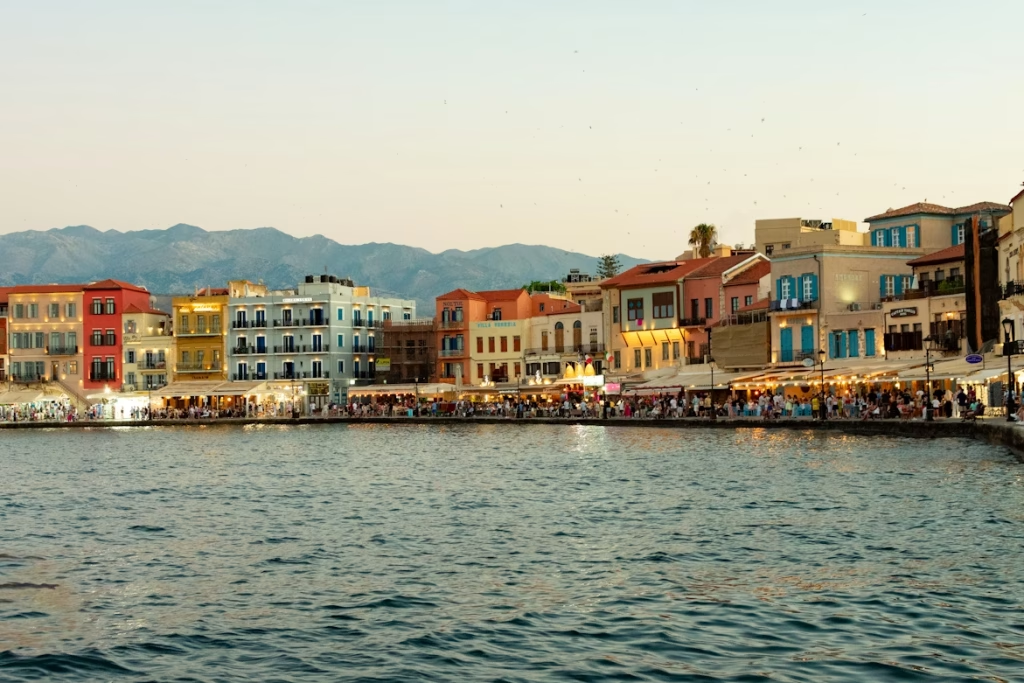
Crete may look manageable on a map, but once you begin planning your itinerary, logistics quickly become one of the most important decisions of the trip. How to get around Crete is not just about moving from point A to point B. It defines how much you can realistically see, how relaxed your days will feel, and whether your route flows smoothly or becomes fragmented by long transfers.
The island stretches roughly 260 kilometers from west to east and is divided by mountain ranges that affect both driving time and public transport routes. Because of this geography, there is no universal answer. The best way to get around Crete depends on your route, your time frame, and how much flexibility you need.
Before diving into details, it helps to understand how each transport option fits different types of trips.
Geography and Distances: Why Logistics Matter Here
Crete is the largest island in Greece, and its scale is something you feel immediately when traveling across it. The northern coastline hosts the main cities — Chania, Rethymno, Heraklion, and Agios Nikolaos — connected by the primary highway. Most public transport services operate along this corridor.
However, once you head inland or toward the southern coast, travel becomes slower and less predictable. The White Mountains in the west and the Psiloritis massif in central Crete shape the road network. Mountain roads include curves, elevation changes, and narrower segments. What looks like a short distance on the map often requires more time than expected.
The key logistical reality of Crete can be summarized simply:
- Distances are long for an island
- Average driving speeds are lower in mountain areas
- Public transport is concentrated along the north coast
- Evening and off-season services are reduced
A 100-kilometer drive can easily take close to two hours. Understanding this helps you plan realistically and avoid overloading your schedule.
Quick Comparison of Transportation Options
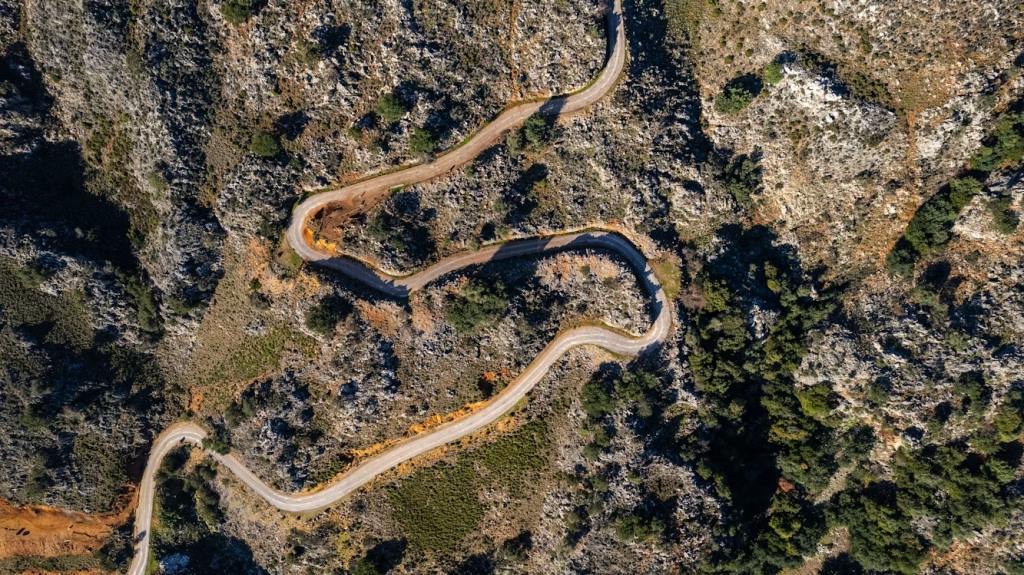
Crete offers several ways to move around, but each one serves a different purpose. Some are practical for short, city-based stays, while others are essential for broader exploration.
Domestic Flights within Greece
Crete has two international airports, in Heraklion and Chania. Flights connect the island with Athens and other Greek cities throughout the year. Domestic flights are particularly useful if you combine Crete with mainland Greece or if you arrive in one Cretan airport and depart from another.
Flights are relevant mainly in these situations:
- Combining Crete with mainland Greece
- Arriving in one airport and leaving from another
- Avoiding a long overnight ferry
They offer speed and reliability, but they do not help with moving between cities within Crete itself. There are no internal flights across the island.
Trains
There is no railway system on Crete. All transport across the island relies on roads or sea routes.
Intercity Buses
Intercity buses form the backbone of public transport. Two regional operators connect the main northern cities efficiently. If your itinerary is based around one city and you plan day trips along the northern coast, buses can work very well.
They are especially effective on routes such as Heraklion to Rethymno, Heraklion to Chania, and Chania to Rethymno. Coaches are modern and air-conditioned, and ticket prices are affordable.
However, once you move beyond the northern corridor, frequency decreases. Southern villages, remote beaches, and mountain areas are less well served, especially outside peak season.
The strengths and limitations of buses can be summarized as follows:
- Affordable and comfortable on main routes
- Reliable along the north coast
- Limited evening departures
- Less coverage in remote southern areas
For example, traveling from Heraklion to Chania by bus usually takes between 2.5 and 3 hours.
Car Rental
Renting a car significantly changes your experience of the island. Because of Crete’s size and mountainous terrain, flexibility becomes extremely valuable once you move beyond the main northern highway.
A rental car allows you to explore southern Crete, reach beaches that are not directly connected by bus, and divide your stay between multiple regions. It removes dependence on timetables and allows spontaneous stops.
Car rental becomes especially practical when:
- Exploring remote beaches
- Visiting southern coastal villages
- Dividing your stay between two regions
- Traveling with family or heavy luggage
The trade-offs include parking challenges in historic city centers, fuel and insurance costs, and the need to drive carefully on mountain roads. For short stays focused on one city, a car may not be necessary. But for broader exploration, it is often the best way to get around Crete.
Taxis and Ride Apps
Taxis operate in major towns and tourist areas. They are convenient for airport transfers, short city distances, and late-night arrivals when buses are no longer running.
For longer cross-island travel, however, taxis quickly become expensive. There is no unified island-wide ride-sharing system comparable to major European capitals, and availability decreases in rural areas.
In practice, taxis are best suited for:
- Airport transfers
- Short urban rides
- Situations where convenience matters more than cost
They are rarely a cost-effective solution for long distances.
Organized Tours and Transfers
Organized tours combine transport with a structured itinerary. They are particularly useful if you prefer not to drive or if public transport does not directly reach your destination.
Popular destinations such as Balos Lagoon, Elafonissi Beach, and Samaria Gorge often involve complex logistics when traveling independently. Tours simplify these connections by including transfers and coordination between different segments of the route.
Their practical advantages include:
- Transport included
- No need to coordinate multiple connections
- Suitable for first-time visitors
The trade-off is limited flexibility. Tours follow fixed schedules and may feel rushed during high season.
Ferries and Boats
Ferries connect Crete with mainland Greece and nearby islands such as Santorini. The main ports are located in Heraklion and Souda near Chania.
Ferries become essential when combining Crete with Athens or other islands. Overnight routes allow you to book a cabin and travel while sleeping, which can be efficient for longer journeys.
Key considerations for ferry travel include:
- Booking in advance during July and August
- Allowing buffer time in case of wind delays
- Confirming car transport rules with rental companies
Ferries are scenic and practical, but they are weather dependent and require planning.
Cable Cars and Mountain Shuttles
Crete does not have ski-style cable car systems. However, certain natural sites operate coordinated shuttle systems, especially in protected mountain areas.
The most notable example is Samaria Gorge. Visiting it involves taking a bus to the entrance, hiking through the gorge, then boarding a boat from Agia Roumeli before returning by bus.
Mountain shuttle logistics are important when:
- Visiting Samaria Gorge
- Accessing protected hiking areas
- Reaching remote mountain trailheads
These systems operate seasonally and follow fixed schedules, so checking official timetables and weather conditions is essential.
Car Rental: Is It Worth It?
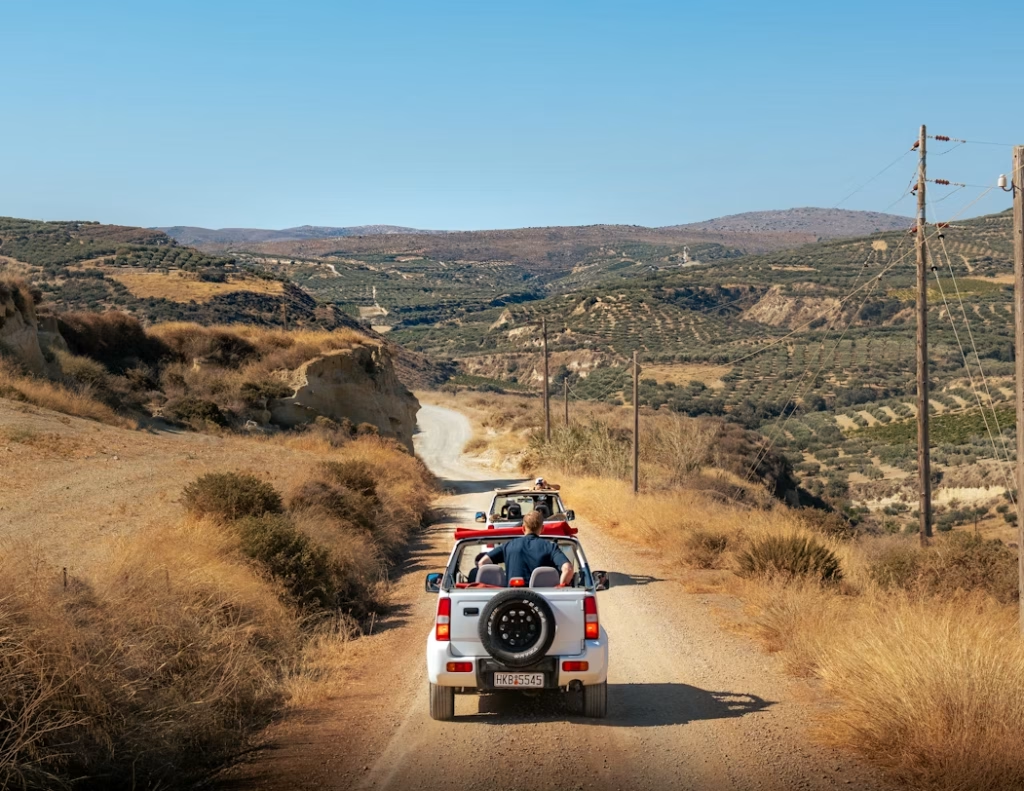
For many travelers, this is the central question when deciding how to get around Crete. The island’s geography makes flexibility extremely valuable, but that does not automatically mean everyone needs a car. The answer depends on how wide your route is and whether you plan to explore beyond the northern coastal cities.
If your trip includes western Crete beyond Chania, southern coastal villages, or beaches that are not directly connected by frequent bus routes, renting a car often becomes the most efficient option. It allows you to move at your own pace, avoid rigid timetables, and make spontaneous stops at viewpoints or small tavernas along the way. Cross-island transfers also become significantly easier.
Car rental makes the biggest difference when:
- Your itinerary covers more than one region of the island
- You plan to visit beaches like Balos, Falassarna, or Elafonissi
- You want to explore southern Crete
- You prefer flexible daily schedules
At the same time, it is important to be realistic about the trade-offs. Parking in historic centers such as Chania Old Town can be limited in high season. Fuel and insurance increase your total transport budget. Mountain roads require attention, especially in unfamiliar terrain. For a short stay focused only on Heraklion and Knossos, or a relaxed resort holiday with organized excursions, a car may not be essential.
License, Insurance, and Practical Driving Details
Driving regulations on Crete follow standard Greek rules. EU driving licenses are accepted without additional documentation. Visitors from many non-EU countries are required to carry an International Driving Permit alongside their national license.
Most rental companies require drivers to be at least 21 years old, although certain vehicle categories may require a minimum age of 23 or 25. Younger drivers may pay a daily surcharge. A security deposit is typically blocked on a credit card, and the amount depends on the vehicle type and insurance package.
When reviewing rental conditions, focus on the essentials:
- Collision damage coverage and excess amount
- Theft protection
- Glass and tire coverage
- Roadside assistance
There are no toll roads on Crete. Fuel prices are similar to mainland Greece. Driving along the northern highway is straightforward, but inland and southern routes can include narrow sections and sharp curves. Planning realistic daily distances makes driving far more comfortable.
Public Transport: How to Minimize Friction

Public transport on Crete is functional and often reliable, but it requires planning. Buses operate efficiently along the northern corridor between Chania, Rethymno, Heraklion, and Agios Nikolaos. For travelers staying in one city and taking day trips, this system can work surprisingly well.
However, the further you move from the northern axis, the more limited the schedule becomes. Southern villages and certain beaches may only be served once or twice per day, and evening services are reduced. Sunday timetables can also differ from weekday schedules.
To reduce stress when relying on buses:
- Always check the return schedule before departing
- Avoid planning tight evening connections
- Allow buffer time between transfers
- Confirm seasonal routes in advance
Tickets can usually be purchased online, at central bus stations, or sometimes directly from the driver. There is no island-wide unlimited transport pass; tickets are issued per route. In high season, booking ahead helps secure a seat on longer journeys.
Ferries and Inter-Island Connections
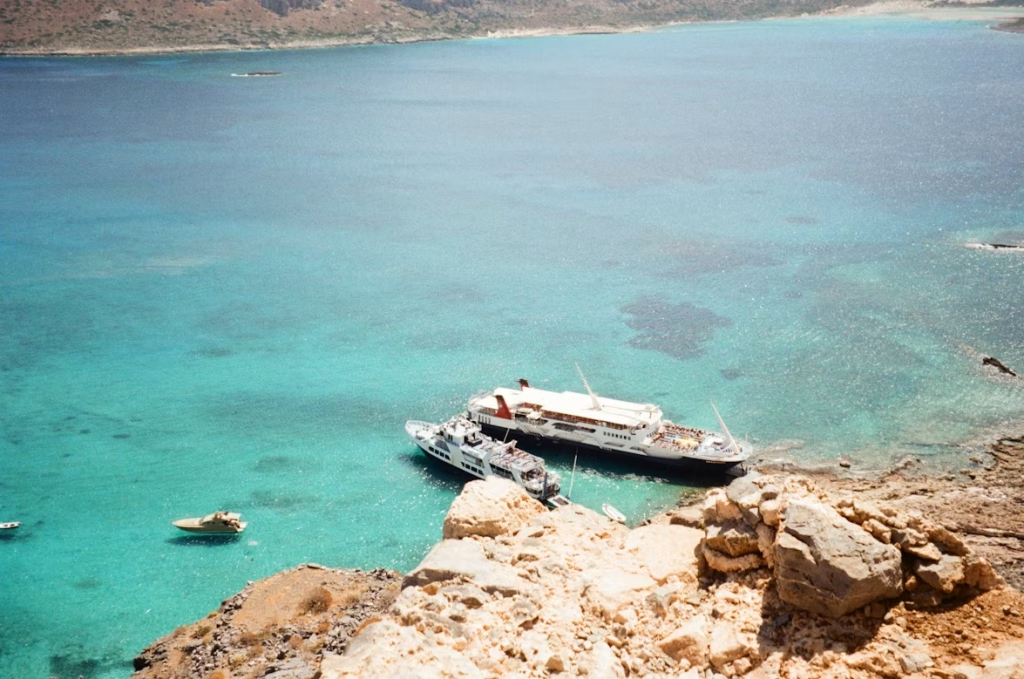
Although many visitors focus on land transport, ferries play a major role if your trip includes Athens or other islands. The main ports on Crete are Heraklion and Souda near Chania. Routes connect the island with Piraeus in Athens and, in season, with Santorini and other destinations.
The ferry journey to Athens typically takes around eight to nine hours. Many departures operate overnight, allowing you to book a cabin and save on accommodation. High-speed ferries shorten travel time to islands like Santorini but are generally more expensive.
When planning ferry travel, keep these practical points in mind:
- Book in advance during July and August
- Confirm car transport rules with your rental company
- Arrive at the port at least one hour early with a vehicle
- Monitor weather conditions, especially during windy periods
Strong summer winds can occasionally cause delays or cancellations. Avoid scheduling tight same-day flight connections after ferry arrivals.
Mountain Areas and Seasonality

Crete’s mountainous landscape influences mobility more than many visitors expect. Inland routes are scenic but slower, and weather conditions can affect both road safety and hiking access.
Samaria Gorge is the most famous hiking destination. Visiting it involves coordinated transport: a bus to the entrance at Omalos, a hike through the gorge, a boat from Agia Roumeli to Sougia or Sfakia, and then a bus back to your base. This system operates seasonally, usually from May to October, depending on weather conditions.
Seasonality affects transport across the island in several ways:
- Some bus routes are reduced in winter
- Tourist boat services may not operate daily outside summer
- Mountain weather can change quickly
- Certain hiking areas close after heavy rain
From November to March, Crete remains accessible, but travel requires more flexibility. Checking official timetables and weather forecasts before planning mountain excursions is essential.
Route Scenarios: Time and Budget Logic
Understanding theory is helpful, but seeing how different transport strategies work in practice makes decision-making easier. Below are realistic route scenarios that illustrate how to get around Crete depending on your travel style.
Scenario 1: 3-4 Days, No Car
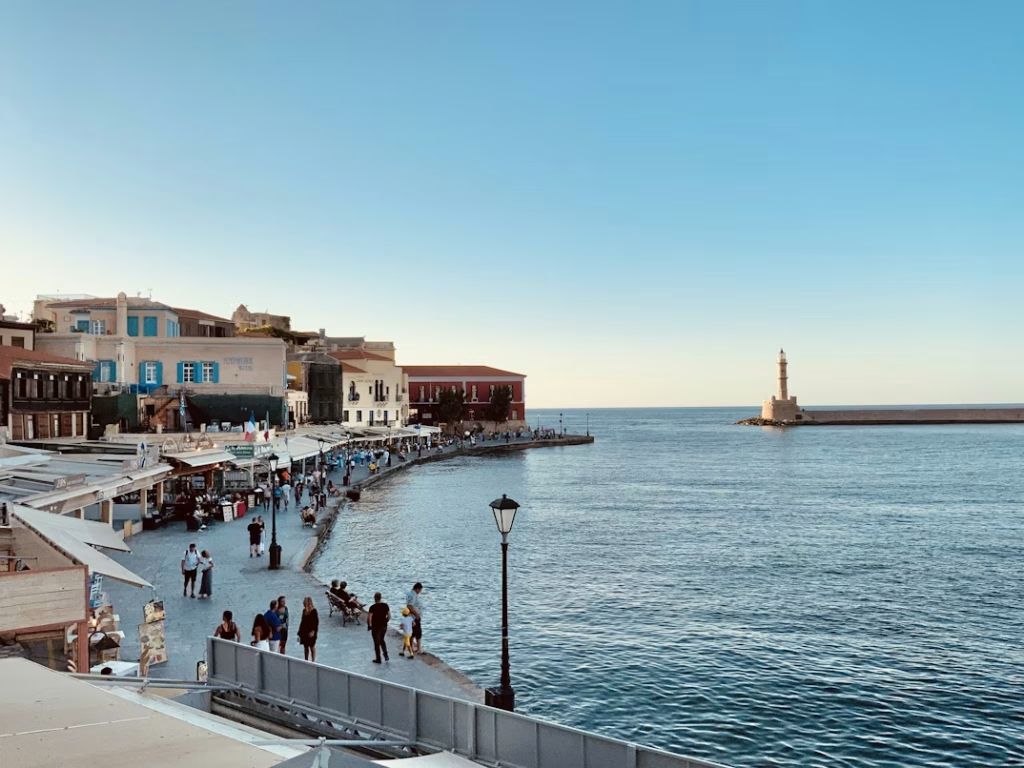
This scenario suits travelers on a short cultural stay who prefer not to drive. The structure is simple: one base, ideally in Heraklion or Chania, with urban buses and one or two intercity trips.
Your daily schedule revolves around bus timetables. You might visit Knossos by local bus, take a day trip to Rethymno, and spend a beach day nearby. Travel time impact is moderate, typically one to three hours per excursion day. Transport costs stay reasonable, and guided tours often become the most expensive element rather than buses themselves.
Typical transport costs:
- Urban and intercity buses (total 3-4 days): €50-€100 per person
- Optional guided tour: €40-€80
To keep logistics smooth:
- Stay near the central bus station
- Book tours early in peak season
- Avoid planning intercity travel late in the evening
This structure works well for city-focused visits but limits access to remote beaches.
Scenario 2: 7 Days with Rental Car
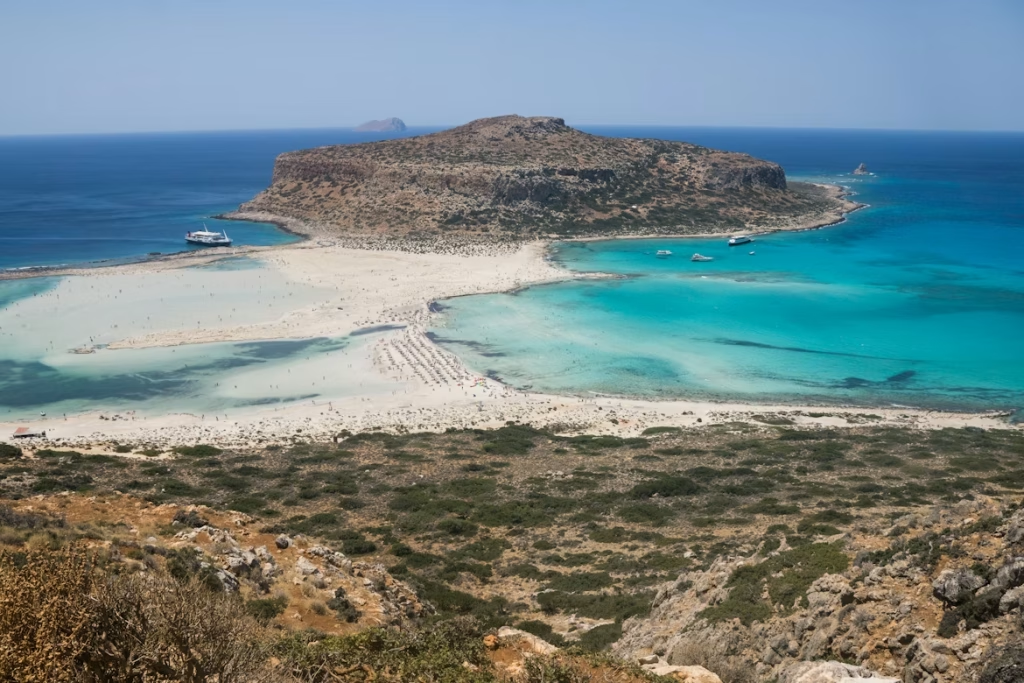
For families or active travelers, renting a car for the full week provides the best balance between flexibility and efficiency. A practical structure includes two bases, for example western Crete and central or eastern Crete.
Cross-island transfers usually take two to three hours. Having a car allows you to explore beaches, villages, and mountain areas without relying on bus schedules. The largest expense is the rental itself, followed by fuel.
Estimated transport costs for one week:
- Car rental: €400-€600
- Fuel: €80-€120
- Parking: €20-€40
- Total: €500-€760
Split between two people, this equals approximately €250-€380 per person.
To manage expenses:
- Book four to six weeks in advance in high season
- Avoid one-way drop fees if possible
- Choose a compact vehicle unless you need extra space
For full island exploration, this is often the most practical way to get around Crete.
Scenario 3: South Coast Focus
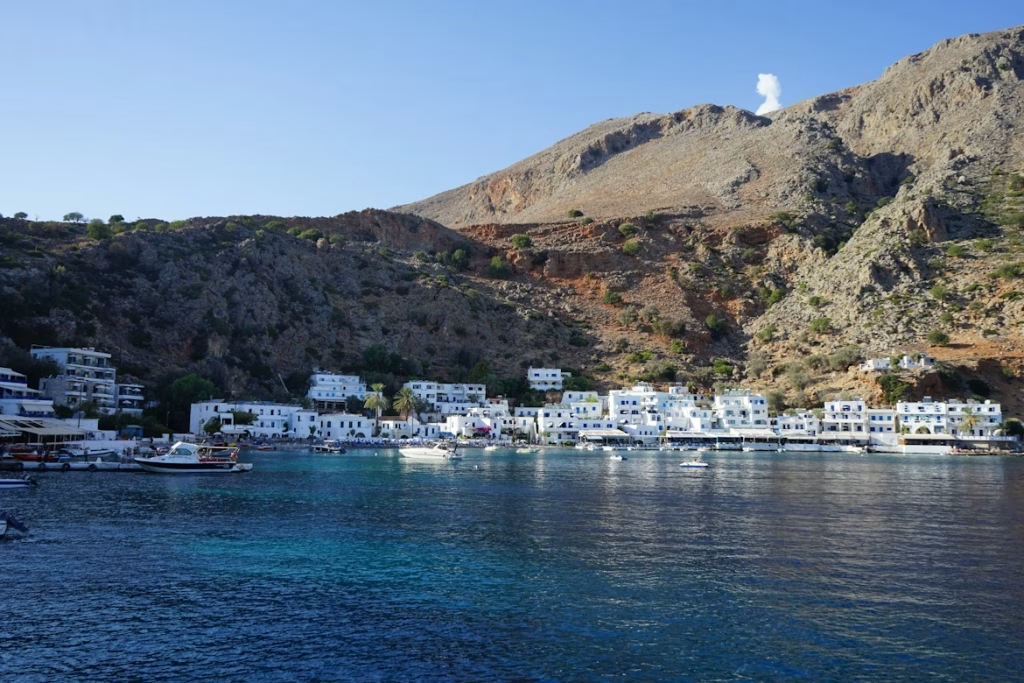
Travelers focused on nature and less developed areas often choose the south coast. This region is more remote and less connected by public transport, making a rental car almost essential.
Roads are scenic but slower due to curves and elevation changes. Daily driving time may increase, and fuel consumption can be slightly higher in mountain areas.
Typical weekly transport costs:
- Car rental: €400-€650
- Fuel (longer mountain drives): €100-€150
- Total: €500-€800
To make this structure efficient:
- Plan circular routes rather than backtracking
- Choose two small southern bases
- Check road conditions before longer drives
Public transport coverage here is limited, so flexibility becomes especially valuable.
Scenario 4: Crete + Santorini

If your itinerary combines Crete with Santorini, ferry logistics become central. A common structure includes four days in Crete and three days in Santorini.
High-speed ferries reduce travel time but cost more. Renting a car only for the Crete portion and returning it before departure avoids off-island fees.
Typical transport costs per person:
- Ferry Crete–Santorini: €60-€90
- Car rental (3-4 days in Crete): €120-€300
- Total transport: €180-€390
To optimize this route:
- Book ferry tickets several weeks in advance during peak season
- Schedule ferry departures with buffer time
- Confirm port locations carefully, as Crete has multiple ports
This combination offers variety but requires coordinated planning and realistic timing.
Useful Apps and What to Check Before Travel
Efficient planning requires reliable information sources. Google Maps works well for navigation, and downloading offline maps is helpful in mountain areas with weaker signal. Official bus operator websites provide updated timetables, which should always be checked close to departure dates.
Before visiting gorges or remote beaches, confirm seasonal opening status and weather conditions. Ferry operator websites and port authority announcements provide updates on schedule changes.
Key tools to rely on include:
- Google Maps for driving navigation
- Official bus operator websites for timetables
- Ferry company websites for bookings
- National park or regional updates for hiking access
Avoid relying solely on third-party blogs for transport schedules, especially outside high season.
Conclusion

Crete rewards realistic planning. The island is large, mountainous, and regionally diverse. Choosing the best way to get around Crete depends on whether you prioritize flexibility, budget, or simplicity.
For short city stays, buses and occasional taxis can work well. For broader exploration, especially of southern and western regions, renting a car often becomes the most efficient solution. Ferries connect Crete with mainland Greece and nearby islands but require attention to weather and seasonality.
Understanding distances, checking schedules, and building buffer time into your itinerary transforms transport from a source of stress into a manageable part of the journey. With the right strategy for how to get around Crete, you can focus less on logistics and more on experiencing the island itself.